What is Precision Engineering? A Detailed Guide from A to Z
Precision engineering is the cornerstone of modern manufacturing, delivering products with outstanding durability and aesthetics. With the rapid development of technology, precision machining services are increasingly chosen by businesses to optimize processes, reduce costs, and improve efficiency. This is the ideal solution for every industrial sector.
.jpg)
What is Precision Engineering?
Precision engineering is a branch of mechanical engineering focused on producing components and parts with extremely high accuracy through the use of modern machinery, advanced technology, and physical principles. The goal is to ensure products achieve near-absolute precision in dimensions, shapes, tolerances, and durability.
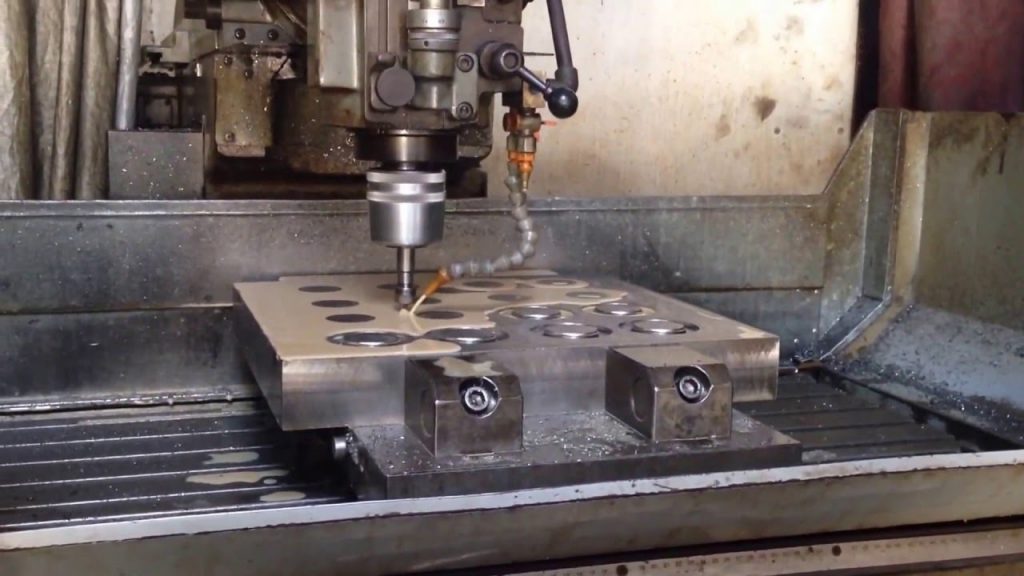
In production, engineers often utilize systems such as lathes, milling machines, grinders, drilling machines, laser cutters, and even high-speed robots to create products that meet strict technical standards. Materials applied are diverse, including steel, stainless steel, aluminum, plastic, glass, and graphite.
Thanks to its accuracy, durability, and repeatability, precision engineering now plays a foundational role in manufacturing industries, mass production, and fields requiring high standards.
Common Classifications of Precision Engineering
.jpg)
Before selecting a production method, it’s important to distinguish different types of precision engineering based on technology and technical characteristics.
Non-chip forming (without chips)
This method shapes materials through pressure or heat without producing chips. Common techniques include casting, hot forging, welding, extrusion, and rolling. Although not initially as precise, this method is suitable for creating semi-finished products for further machining.
Chip-forming (with chips)
Also known as cutting machining, this involves turning, milling, grinding, and drilling to remove excess material. Its advantage lies in achieving high accuracy and producing parts with the required geometry and surface finish.
Special processing technologies
Beyond the two main categories, modern precision engineering also applies advanced methods such as electrical discharge machining (EDM), ultrasonic machining, laser machining, and CNC technology. These are ideal for complex parts, hard materials, or components requiring ultra-small tolerances.
Products of Precision Engineering
Precision engineering products can be found in every field, from simple to highly complex applications.
-
Daily life applications: Furniture, home appliances, kitchenware, and decorative items. These usually require medium accuracy and are suitable for mass production.
-
Industrial applications: Automotive components, machine parts, and mechanical accessories. These demand strength, durability, and high precision.
-
Medical and aerospace applications: Dental components, surgical instruments, aircraft parts, satellites, etc. These require advanced technology and near-absolute accuracy.
CNC in Precision Engineering
To meet rising demands, CNC (Computer Numerical Control) technology has become a breakthrough in precision engineering.
CNC machines—such as milling, turning, and grinding systems—are controlled by computer software, enabling automation of the production process. With pre-programmed instructions, CNC machines can manufacture complex parts, from curves to inclined surfaces, with exceptional accuracy and speed.
Today, CNC technology has largely replaced manual machining thanks to its stability, repeatability, and ability to minimize errors.
Advantages of CNC Precision Engineering
.jpg)
Before going into detail, it should be emphasized that CNC technology has elevated precision engineering to a new level in modern manufacturing.
Outstanding Productivity
CNC machines operate continuously with minimal downtime, reducing reliance on operator skills. This helps businesses save costs and shorten production times.
High Accuracy
Products are manufactured strictly according to design drawings, with almost zero error. Even highly complex parts meet strict tolerance requirements.
Flexibility
CNC machines can quickly switch from one product to another by simply changing the program. This is highly beneficial for businesses producing a wide variety of items.
Cost Optimization
By reducing errors, minimizing inspection labor, and shortening production cycles, CNC technology helps save significant long-term costs.
Conclusion
From this article, it is clear that precision engineering is not only a technical concept but also the foundation of modern industry. With the rise of CNC and other advanced technologies, the sector is delivering products that meet international standards, serving diverse fields from daily life to heavy industry.
Cơ Khí Trường Thịnh Contact Information
???? Hotline: Mr. Hưng: 0936.988.978 – Mrs. Tâm: 0904.488.455 – 0225.627.79.97
???? Production Workshop Address: Zone C, No. 57, Km5, Lam San, So Dau Ward, Hong Bang District
???? Website: http://cokhiphutrotruongthinh.com