What Is Mechanical Machining? A Complete A–Z Overview
Mechanical machining is a key activity in manufacturing and fabrication, contributing to the production of parts, components, and products serving various industries. Thanks to the development of modern machining technologies—especially CNC—the production process now achieves high precision, stability, and economic efficiency.
.jpg)
Overview of Mechanical Machining in Modern Manufacturing
Mechanical machining is the process of using machinery, equipment, and technology to shape, cut, or finish metal components according to technical drawings. This activity is present in nearly every industrial sector, including machinery manufacturing, automotive, electronics, medical devices, and automation.
In the context of industrialization, requirements for precision, durability, and interchangeability are increasingly stringent. As a result, mechanical machining is no longer limited to single-part production but has expanded toward mass production with consistent quality.
Common Types of Mechanical Machining Today
.jpg)
Mechanical machining includes a wide range of categories, each serving specific production needs. Below are the most widely used machining types.
Machining of Machine Components
Machining machine components involves producing parts such as shafts, gears, bearings, and machine housings. These components require high precision to ensure stable operation and long service life.
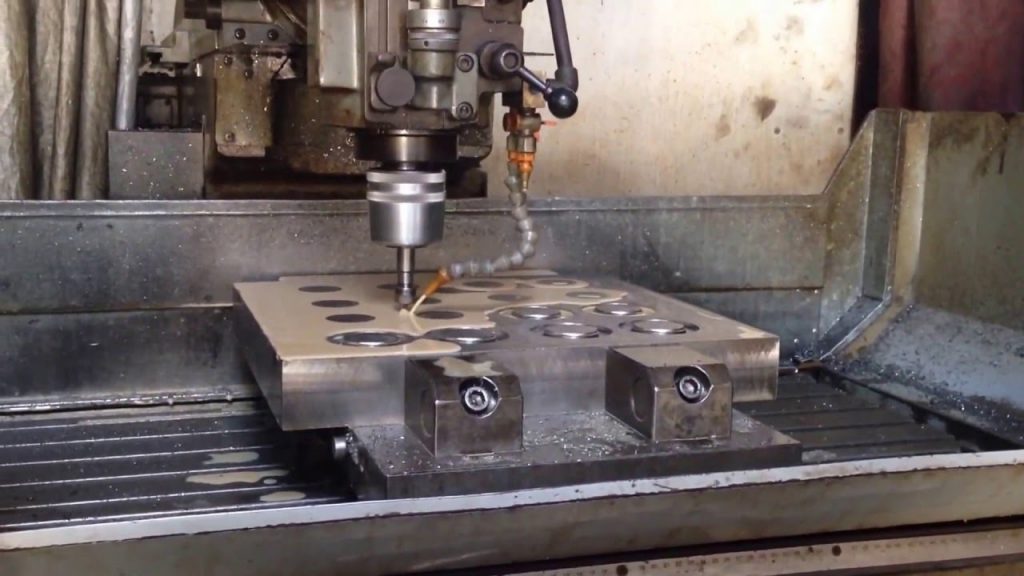
The process typically includes turning, milling, grinding, drilling, and boring. Depending on technical requirements, parts may be machined using conventional machines or modern CNC equipment.
Mold Machining
Mechanical machining in mold manufacturing plays a fundamental role in mass production. Molds are used to shape plastic, metal, or rubber products with high repeatability.
Mold machining requires strict precision, particularly in surface finish and dimensions. Common processes include CNC milling, precision grinding, and surface treatment to ensure long-term stable mold performance.
Read more:
http://cokhiphutrotruongthinh.com/cong-ty-gia-cong-co-khi-theo-yeu-cau-uy-tin-chat-luong-bv.html
Machining of Assembly Components and Technical Requirements
Mechanical machining for assembly components focuses on precise connectivity between parts. These components often include holes, slots, threads, or mating surfaces with tight tolerances.
Creating Holes, Slots, and Mating Surfaces
This process uses drilling, milling, tapping, and grinding to ensure components can be assembled quickly, accurately, and without deviation during operation.
Inspection and Quality Control
Assembly components are always inspected using precision measuring tools such as calipers, micrometers, or CMM machines. Quality control helps minimize errors and increase reliability of the final product.
Prototype Machining – A Foundation for Mass Production
.jpg)
Mechanical machining at the prototyping stage allows businesses to validate designs before investing in large-scale production. Prototypes enable evaluation of feasibility, performance, and durability.
Initial Prototype Machining
Prototypes are machined with high precision using turning, milling, and grinding processes to accurately reflect technical designs. This step is critical in reducing risks during mass production.
Design Evaluation and Adjustment
After completion, prototypes are tested in real conditions. Necessary adjustments are made to optimize structure, materials, and production costs.
Benefits of Choosing a Professional Mechanical Machining Provider
Mechanical machining carried out by a reputable provider delivers significant value to manufacturing businesses. In addition to ensuring product quality, professional services help optimize time and cost.
A capable machining company possesses modern machinery, experienced technicians, and a well-defined quality control process. As a result, products consistently achieve high precision and long-term stability.
Conclusion
Mechanical machining is an indispensable foundation of the manufacturing industry, contributing to the creation of high-quality products that meet increasingly demanding production requirements. Understanding machining methods, applications, and technologies helps businesses choose appropriate solutions. Investing in reputable machining partners and modern technology is the key to sustainable development in the future.
Cơ Khí Trường Thịnh – Contact Information
Hotline:
Mr. Hưng: 0936 988 978
Mrs. Tâm: 0904 488 455
0225 627 79 97
Factory Address: Zone C, No. 57, Km5 Lam San, So Dau Ward, Hong Bang District, Hai Phong, Vietnam
Website: http://cokhiphutrotruongthinh.com