What Are Mechanical Machining Methods? Detailed Classification
What are mechanical machining methods? This is a question frequently asked by businesses and engineers in the context of modern manufacturing. With the rapid development of technology, mechanical machining is no longer limited to traditional methods but has expanded to high-precision CNC machining, meeting strict requirements for accuracy and productivity. The article below will help you gain a clearer understanding.
.jpg)
What Are Mechanical Machining Methods?
Mechanical machining methods are understood as a set of techniques that use machinery, technology, and physical principles to shape, alter dimensions, or finish the surface of mechanical components according to technical drawings. This process aims to create parts and machine components that meet requirements for accuracy, durability, and interchangeability in production.
Mechanical machining plays a key role in industries such as machinery manufacturing, automotive, electrical and electronics, construction, and automation. Depending on technical requirements, materials, and production volume, engineers will select suitable machining methods to optimize cost and quality.
Classification of Mechanical Machining Technologies
.jpg)
Before examining each specific technique in detail, it is important to understand that mechanical machining is classified based on various criteria to serve diverse manufacturing purposes.
Classification by Chip Formation
When classified by chip formation, mechanical machining methods are divided into two main groups: non-chip machining and chip machining.
Non-Chip Machining
Non-chip machining is a method of shaping parts using pressure or heat without removing material. Common technologies include casting, forging, stamping, extrusion, and welding. This method is often applied to components that do not require high precision and usually need further finishing processes afterward.
Chip Machining
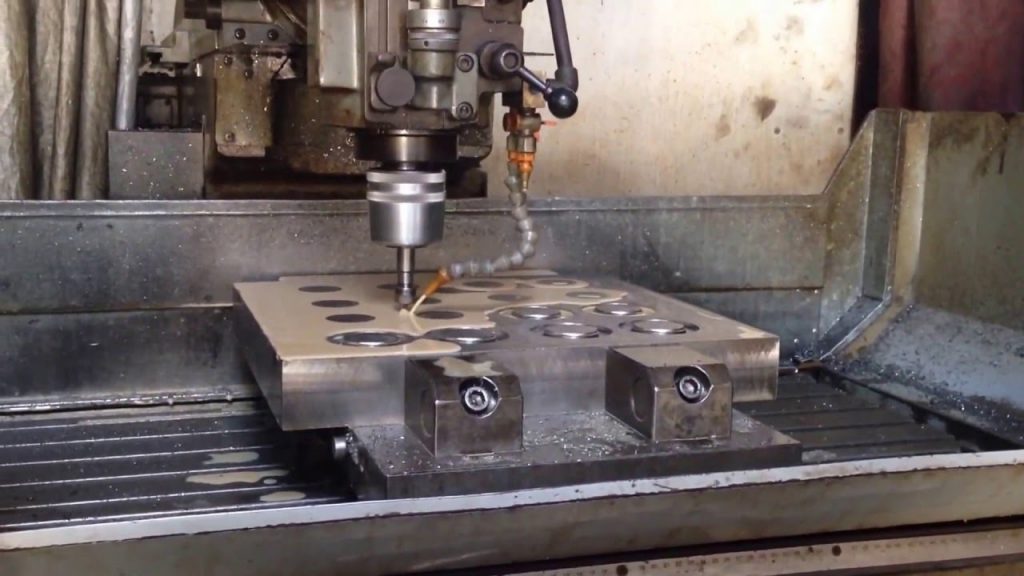
Chip machining, also known as cutting machining, is the process of removing excess material from the workpiece to achieve the desired shape and dimensions. Methods such as turning, milling, grinding, drilling, and planing belong to this group and are widely used in the production of precision components.
Classification by Accuracy Level
When classified by accuracy, mechanical machining methods include rough machining, finish machining, and ultra-finish machining.
Rough Machining
Rough machining aims to quickly remove a large amount of excess material to create the basic shape of the part. This stage does not require high surface smoothness or tight tolerances.
Finish Machining
Finish machining focuses on completing the dimensions and surface quality of the part after rough machining. This process uses higher cutting speeds and smaller depths of cut to achieve high precision and better surface appearance.
Ultra-Finish Machining
Ultra-finish machining produces products with extremely high precision, very tight tolerances, and ultra-smooth surfaces. This method is commonly used in specialized industries such as medical devices, aerospace, and optical technology.
See more:
http://cokhiphutrotruongthinh.com/cong-ty-gia-cong-co-khi-uy-tin-co-khi-truong-thinh-bv.html
Common Mechanical Machining Methods Today
(1).jpg)
After understanding the classification, learning about each machining method will help businesses choose the most suitable solution for their manufacturing needs.
Traditional Mechanical Machining
In the traditional context, mechanical machining methods involve using conventional lathes, milling machines, and drilling machines to remove material. The accuracy of this method largely depends on the skill of the operator and is difficult to meet high requirements when machining hard materials.
CNC Precision Machining
When referring to CNC, mechanical machining methods involve the use of computer-controlled machines for automated processing. CNC technology enables the production of complex parts with high precision, stable repeatability, and outstanding productivity. This is the dominant trend in modern industrial manufacturing.
Standard Mechanical Machining Process
Mechanical machining methods are also clearly reflected in a strict implementation process to ensure product quality.
Technical Drawing Analysis
Engineers analyze technical drawings, determine technical requirements, and select appropriate machining methods.
Selection of Raw Material and Production Method
The raw material is chosen to optimize material usage and cost, while determining whether the production will be single-piece, batch, or mass production.
Machining Execution
Rough machining, finish machining, and necessary operations are carried out using suitable machines such as CNC lathes, CNC milling machines, grinding, and drilling equipment.
Quality Inspection
Finished products are measured and inspected using specialized equipment to ensure correct dimensions, tolerances, and surface smoothness.
Conclusion
What are mechanical machining methods? This is a crucial question for every manufacturing business and mechanical engineer. Understanding machining methods, classifications, and processes helps in selecting suitable technologies, ensuring product quality, and optimizing costs. In the context of modern industry, flexibly combining traditional machining and CNC machining is the key to sustainable development and enhanced manufacturing capability.
Trường Thịnh Mechanical Engineering Information
-
Hotline:
Mr. Hưng: 0936 988 978
Mrs. Tâm: 0904 488 455
Tel: 0225 627 79 97 -
Factory Address: Zone C, No. 57, Km5, Lam San, So Dau Ward, Hong Bang District, Hai Phong, Vietnam
-
Website: http://cokhiphutrotruongthinh.com