Milling Machines: What They Are and Their Applications in Machining
In the manufacturing industry, milling machines play an important role and are one of the main tools in machining. With the ability to create complex-shaped products with high precision, these machines have become an indispensable part of modern production processes.
.jpg)
What is a Milling Machine?
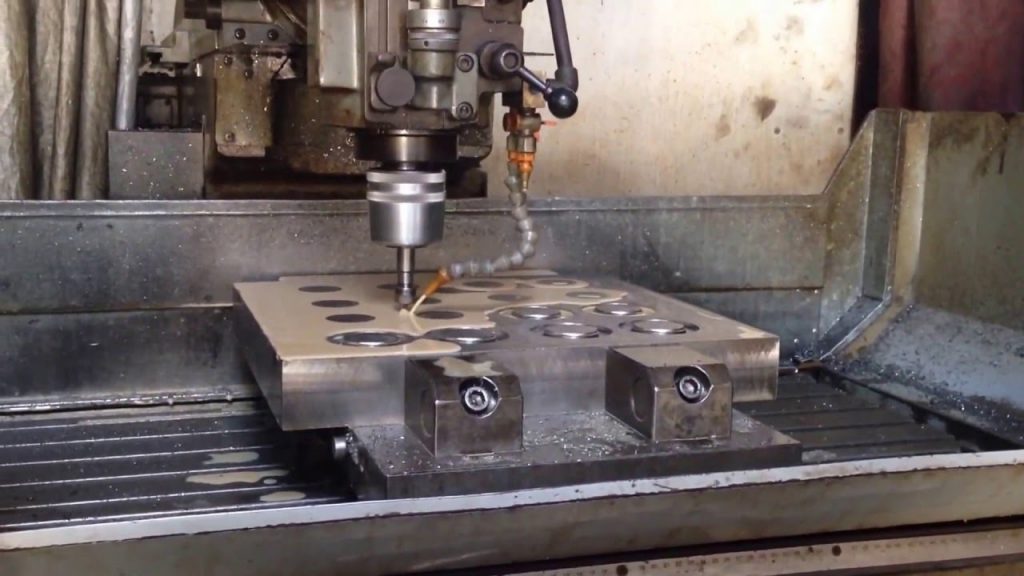
A milling machine is a type of machine tool used for machining metal components by cutting and shaping. It operates based on the principle of rotating cutting tools, which allows for the removal of excess material from the surface of the workpiece. Milling machines can perform various types of machining operations, including flat milling, slot milling, contour milling, and gear milling.
These machines are typically equipped with multiple cutting heads and can adjust the rotational speed, helping to meet diverse machining requirements. The design can be vertical, horizontal, or CNC (Computer Numerical Control). Depending on the intended use and technical requirements, users can choose the appropriate type of machine.
The Operating Process of a Milling Machine
.jpg)
The operating process of a milling machine generally follows these basic steps:
-
Preparing the Material: The metal material to be machined is prepared and cut into suitable sizes.
-
Securing the Workpiece: The workpiece is securely fastened to the table using clamps to ensure it does not shift during the cutting process.
-
Choosing the Cutting Tool: Depending on the machining requirements, the operator selects the appropriate cutting tool. Cutting tools can include face mills, slot mills, or contour mills.
-
Setting Machine Parameters: The operator sets the necessary parameters for the machine, including the rotational speed of the cutting tool and the feed rate of the workpiece.
-
Machining Process: The machine starts operating, and the cutting tool rotates and removes material from the workpiece according to the programmed or previously designed shape.
-
Product Inspection: After machining is complete, the product is inspected for accuracy and quality. If necessary, additional machining steps can be performed to finalize the product.
Applications of Milling Machines in Machining
.jpg)
Milling machines have many important applications in machining. Here are some notable applications:
-
Machining Machine Components: They are widely used for machining machine components such as shafts, gears, and other parts of machinery.
-
Mold Production: In mold manufacturing, milling machines play a vital role in creating precise molds for mass production.
-
Machining Electronic Components: Electronic components such as computer casings and mobile phone shells are also machined, ensuring high precision and aesthetics.
-
Automotive and Aerospace Industries: In the automotive and aerospace industries, milling machines are used to machine complex parts such as aircraft bodies, vehicle frames, and engine components.
-
Craftsmanship and Handicrafts: Milling machines are also applied in the production of handcrafted art products, helping to create unique and intricate items.
-
Programming CNC Milling Machines: With advancements in technology, CNC milling machines have become an essential tool in the industry, allowing for automated machining and increased labor productivity.
Conclusion
Milling machines are an indispensable tool in machining, capable of producing high-quality and precise products. The operating process of milling machines, from preparing the material to machining and product inspection, plays a crucial role in production.
Information from Trường Thịnh Mechanical Engineering:
-
Hotline: Mr. Hưng: 0936.988.978 - Mrs. Tâm: 0904488455 - 0225.627.79.97
-
Production Workshop Address: Khu C, số 57 km5, Lâm Sản, P.Sở Dầu Q. Hồng Bàng
-
Website: http://cokhiphutrotruongthinh.com