Common CNC Machining Types Today
Machining types in the mechanical engineering industry are becoming increasingly diverse to meet production demands ranging from single-piece fabrication to mass production. Currently, the two most common methods are precision CNC machining and traditional machining. Each method has its own characteristics, advantages, and scope of application, making it suitable for different technical requirements and investment budgets.
.jpg)
Precision CNC Machining Type
CNC machining is a modern method that applies computer numerical control technology to operate machinery automatically. It is considered a breakthrough in supporting industries and precision mechanical manufacturing.
CNC machining uses pre-programmed software to control the movement of cutting tools and workpieces, producing parts with near-absolute precision and meeting strict technical standards.
.jpg)
CNC Milling
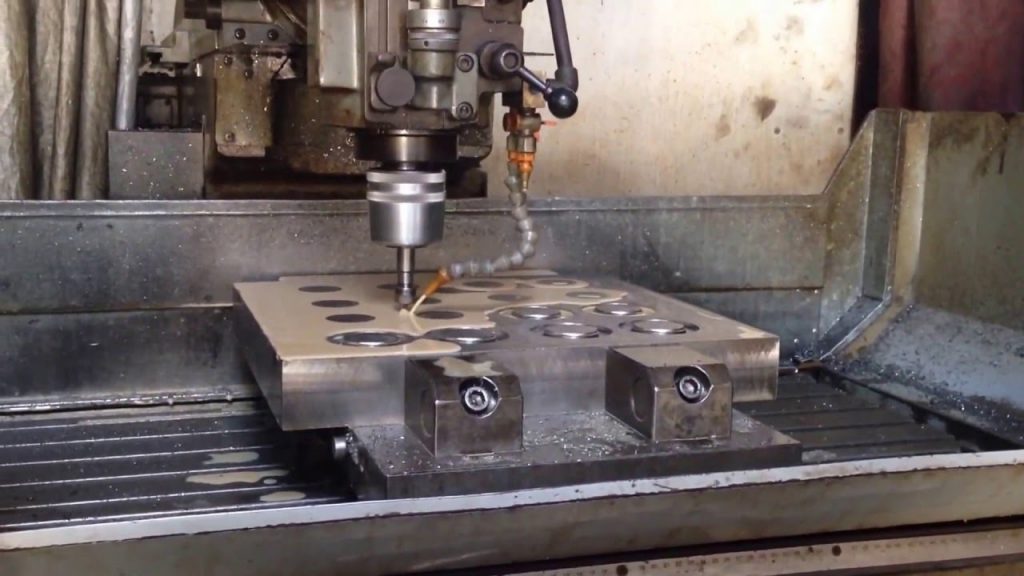
CNC milling uses CNC milling machines with a high-speed rotating spindle to generate cutting motion. Milling cutters, drill bits, and specialized tools act on the workpiece to create slots, flat surfaces, bore holes, or complex geometries.
A key advantage of CNC milling is its ability to machine a wide variety of surface shapes with high precision and excellent repeatability in mass production.
CNC Turning
CNC turning is performed on CNC lathes, where the workpiece rotates around the spindle while the cutting tool moves longitudinally or transversely. This method is ideal for machining cylindrical or rotational parts.
Common operations include internal turning, external turning, facing, step cutting, internal threading, and external threading. Thanks to automated control systems, CNC turning ensures high concentricity and superior surface finish.
Plasma and Laser CNC Machining
This is a non-contact machining type that uses heat to cut materials instead of traditional cutting tools. Plasma or laser CNC cutting machines provide fast cutting speeds with smooth and precise edges.
This method is especially suitable for sheet metals such as steel, stainless steel, and aluminum, helping optimize production time and minimize material waste.
Read more:
http://cokhiphutrotruongthinh.com/cac-loai-may-gia-cong-cnc-pho-bien-nhat-bv.html
Advantages of CNC Machining
.jpg)
-
High precision with minimal tolerance errors
-
Easy machining of complex parts
-
High productivity and continuous operation
-
Consistent and uniform product quality
-
Long-term labor cost savings
Thanks to these outstanding advantages, CNC machining is gradually becoming the dominant trend in Industry 4.0 manufacturing.
Comparison of Two Popular Machining Types
Both CNC and traditional machining have their own roles in the mechanical industry. Choosing the right method depends on product requirements, budget, and the company’s development strategy.
Criteria | CNC Machining | Traditional Machining
Precision | Very high | Medium
Productivity | High | Low
Investment Cost | High | Low
Dependence on Operator Skill | Low | High
Complex Part Machining | Excellent | Limited
In the context of modern industrialization, the shift toward CNC technology is becoming increasingly evident to meet demands for high-precision and large-scale production.
Conclusion
Machining types play a crucial role in determining product quality and production efficiency in the mechanical industry. CNC machining offers superior precision and productivity, while traditional machining remains suitable for basic needs and limited budgets.
Truong Thinh Mechanical Information:
Hotline: Mr. Hung: 0936.988.978 – Mrs. Tam: 0904.488.455 – 0225.627.79.97
Factory Address: Zone C, No. 57 Km5, Lam San, So Dau Ward, Hong Bang District, Hai Phong, Vietnam
Website: http://cokhiphutrotruongthinh.com