What Is CNC Turning? Principles and Characteristics of CNC Turning
CNC turning is a modern machining method that uses computer-controlled machines to shape components from raw materials. This technology is capable of processing rotationally symmetrical products with high precision, consistent dimensions, and good adaptability to both single-piece and mass production requirements.
(1).jpg)
What Is CNC Turning? Operating Principle
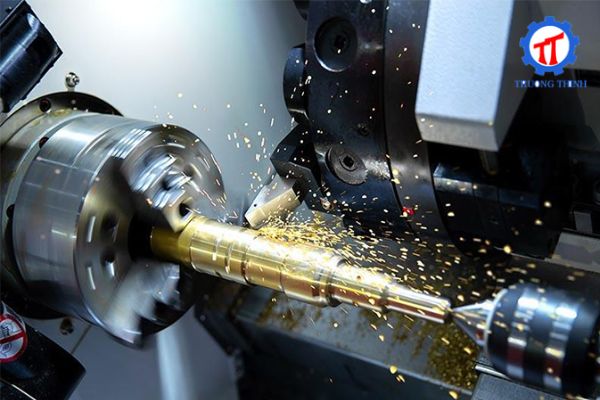
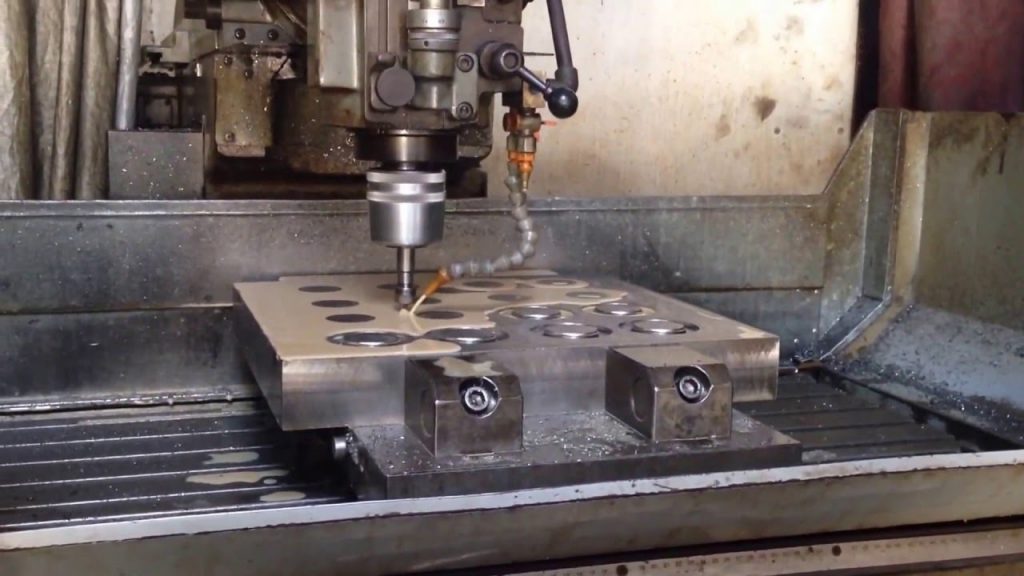
CNC turning operates on the principle that the workpiece is securely clamped in a chuck and rotates around the main spindle, while the cutting tool moves according to programmed coordinates. The combination of the workpiece's rotational movement and the cutting tool's linear movement removes excess material to create the required shape.
The process typically begins with a CAD drawing, after which the data is converted into a control program using CAM software. Once the machine, cutting tools, and coordinates have been set up, the equipment follows the programmed toolpaths to produce components with precise dimensions and shapes.
Operating Principle of a CNC Lathe
A CNC lathe uses a numerical control system to regulate spindle speed, feed rate, cutting depth, and tool position. Operators mainly perform tasks such as workpiece clamping, tool installation, parameter setup, program inspection, and monitoring the machining process.
Depending on the product, the machine can perform various operations such as external cylindrical turning, face turning, internal turning, threading, taper turning, grooving, and profile turning. Accurate programming allows components to be machined according to consistent standards, making the technology particularly suitable for orders requiring high dimensional consistency.
Types of Components Commonly Machined by CNC Turning
CNC turning is particularly suitable for components with rotational or axisymmetric shapes. Common products include shafts, stepped shafts, bushings, tubes, bolts, nuts, washers, pins, and various machine components.
For components with more complex structures, CNC machines can perform multiple machining operations consecutively according to a pre-programmed sequence. This helps reduce setup time and minimize errors between different machining stages.
-> See also: https://cokhiphutrotruongthinh.com/dich-vu-t.html
Advantages and Applications of CNC Turning in Manufacturing
.jpg)
CNC turning offers numerous benefits to mechanical engineering businesses thanks to its ability to automate and precisely control the cutting process. Compared with conventional turning methods, CNC technology improves repeatability, reduces production time, and effectively handles demanding technical requirements.
Key Advantages of CNC Turning
One of the most important advantages of CNC technology is its ability to produce components with relatively consistent dimensions across multiple machining cycles. Pre-programmed operations reduce the influence of manual handling while allowing better control over cutting speeds and toolpaths.
Some key advantages include:
-
High precision and repeatability.
-
Fast machining speeds that improve productivity.
-
Ability to create various component profiles.
-
Reduced errors caused by manual operations.
-
Suitable for both single-piece and mass production.
-
Easy integration with other machining processes.
-
Helps optimize production time and manufacturing costs.
Materials Suitable for Machining
CNC turning can be performed on a wide range of materials depending on the machine configuration, cutting tools, and technical requirements. Common materials include carbon steel, stainless steel, aluminum, copper, brass, and various engineering alloys.
In addition to metals, certain machines and suitable cutting tools can also process engineering plastics such as POM, PA, and PTFE. Cutting parameters should be selected according to the characteristics of each material to ensure surface quality and extend tool life.
Applications in Manufacturing Industries
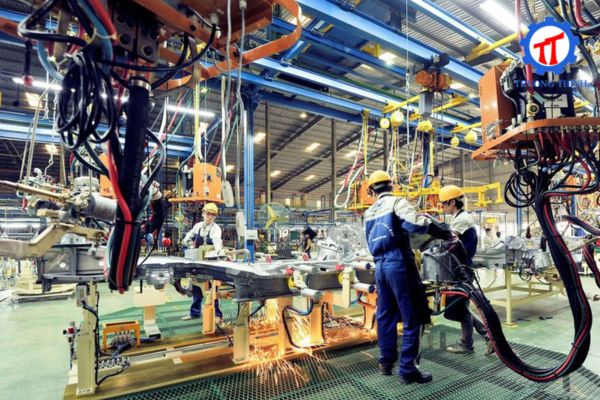
CNC turning is widely used in machine manufacturing, industrial component production, automation equipment, precision engineering, and supporting industries. Machined components can subsequently undergo additional processes such as CNC milling, drilling, tapping, grinding, or surface treatment to create finished products.
This technology is also suitable for businesses that require custom components based on technical drawings. As production volumes increase, CNC programs help maintain consistency between batches and provide better control over production schedules.
Truong Thinh Mechanical – Custom CNC Turning Services
(1).jpg)
CNC turning at Truong Thinh Mechanical is carried out according to customers' technical requirements and drawings. The company aims to provide precision machining solutions for various components and materials used in industrial manufacturing.
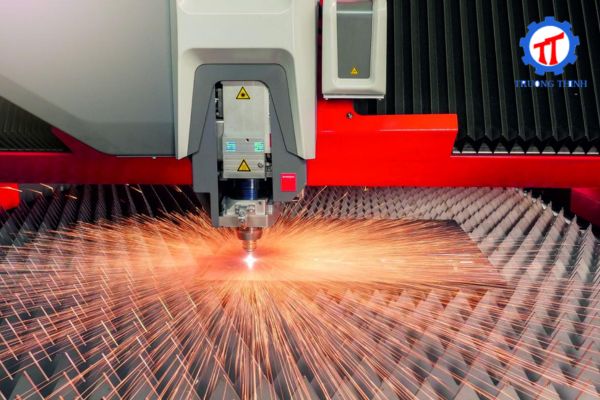
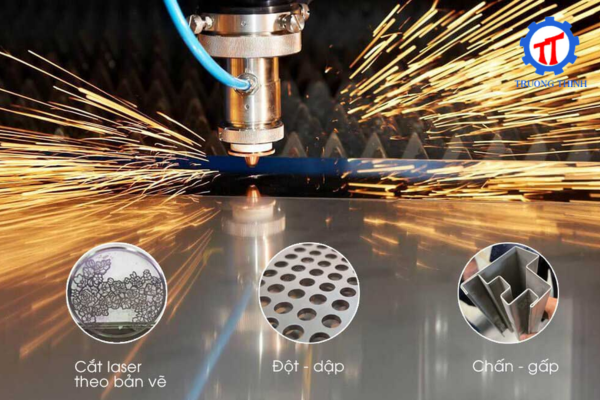
Truong Thinh Mechanical can combine multiple processes, including turning, milling, laser cutting, bending, and welding, to meet custom mechanical machining requirements. Combining different processes within one workflow makes it easier for customers to control quality, production schedules, and final product finishing.
The process typically begins with receiving technical drawings or specifications from the customer. The engineering team reviews dimensions, materials, tolerances, and surface requirements to determine the most suitable machining method.
Conclusion
CNC turning is an effective solution for manufacturing precise and consistent mechanical components while meeting a wide range of production requirements. With modern processes and drawing-based machining capabilities, Truong Thinh Mechanical can support businesses with various custom machining orders, from prototypes to large-scale production.
Truong Thinh Mechanical Information
-
Hotlines: Mr. Hung: 0936.988.978 – Mrs. Tam: 0904.488.455 – 0225.627.79.97
-
Workshop address: Area C, No. 57 Km5, Lam San, So Dau Ward, Hong Bang District, Hai Phong, Vietnam
-
Website: Truong Thinh Mechanical