What Are Automatic Welding Robots? Applications of Welding Robots Today
Automatic welding robots are becoming an optimal solution for mechanical engineering and modern industrial manufacturing businesses. Thanks to their precise operation, continuous working capability, and reduced human error, this technology helps improve productivity, ensure weld quality, and optimize production costs across many industrial sectors today.
.jpg)
What Is an Automatic Welding Robot?
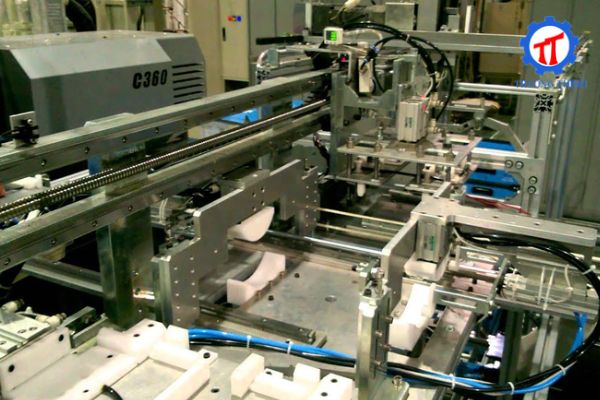
An automatic welding robot is an electromechanical system programmed to perform welding tasks without requiring continuous manual intervention from humans. This equipment typically includes a robotic arm, controller, welding power source, sensors, and intelligent programming software.
With the ability to operate based on pre-programmed instructions, robots can create stable and highly precise welds on various materials such as steel, stainless steel, aluminum, and alloys. This technology is now widely used in modern production lines to improve productivity and product quality.
Besides replacing repetitive tasks, robotic systems also help businesses reduce risks in hazardous environments involving high temperatures, sparks, and toxic fumes. This is an important factor in improving workplace conditions and enhancing long-term production efficiency.
Basic Structure of a Welding Robot System
.jpg)
An automatic welding robot system is usually composed of multiple synchronized components to ensure accurate and stable processing.
Flexible Robotic Arm
The robotic arm is the component that directly performs welding operations. It is designed with multiple degrees of freedom, allowing flexible movement to complex positions on products. Its precise rotation and positioning capabilities help create uniform and aesthetically pleasing weld seams.
Intelligent Controller
The controller acts as the central processing unit of the automatic welding robot. This device manages movement paths, welding speed, electrical current, and many other technical parameters to ensure stable weld quality.
Welding Power Source and Wire Feeding System
The welding power source provides the energy needed to create the welding arc during processing. For MIG or MAG welding technologies, the wire feeding system continuously supplies welding material at an accurate speed.
Sensors and Safety System
Modern sensors help the robot identify material positions, monitor weld quality, and minimize collisions during operation. In addition, the safety system helps protect workers when the automatic welding robot operates in automated production environments.
What Benefits Do Automatic Welding Robots Provide?
.jpg)
Applying robotic technology to metal fabrication processes brings many outstanding advantages to modern manufacturing businesses.
Increased Production Productivity
Automatic welding robots can operate continuously for long periods without rest. As a result, businesses can significantly increase output and handle large orders within shorter production times.
Consistent Weld Quality
Welding parameters are precisely controlled through pre-programmed settings. This ensures uniform weld quality, reduces technical defects, and minimizes damaged products.
Reduced Operating Costs
Although the initial investment cost is relatively high, businesses can save significantly on labor, materials, and production time in the long run. Material waste rates are also substantially reduced.
Improved Working Environment
The welding process of automatic welding robots often involves high temperatures, sparks, and toxic fumes. Using robots helps reduce workplace accidents and better protect employee health.
Common Applications of Automatic Welding Robots Today
Currently, automatic welding robots are widely applied across many manufacturing industries due to their precision and flexibility.
In the automotive industry, automated welding systems are used to fabricate vehicle bodies, chassis, and many other metal components at high speed. In mechanical engineering, robots assist in welding steel structures, industrial machinery, and complex mechanical equipment.
In addition, this technology is also used in shipbuilding, construction, electronics manufacturing, and the aerospace industry. Integrating robots into production lines helps businesses improve competitiveness and meet increasingly strict technical requirements in the market.
What Should Businesses Consider When Choosing Automatic Welding Robots?
To invest effectively, businesses need to carefully evaluate production demands, material types, and suitable welding technologies. Factors such as machine capacity, operating range, programming capability, and automation level should also be thoroughly considered.
In addition, businesses should prioritize reputable suppliers capable of providing technical support, maintenance services, and professional operational training. This helps ensure stable system operation and extends equipment lifespan.
Conclusion
Automatic welding robots are becoming an essential solution in modern industrial manufacturing trends. With the ability to improve productivity, ensure weld quality, and optimize operating costs, this technology helps businesses enhance competitiveness and achieve sustainable growth. Investing in the right robotic welding system will provide long-term efficiency for all mechanical manufacturing industries today.
Trường Thịnh Mechanical Information
-
Hotline: Mr. Hưng: 0936.988.978 – Mrs. Tâm: 0904.488.455 – 0225.627.79.97
-
Factory Address: Area C, No. 57 KM5, Lam San, So Dau Ward, Hong Bang District, Hai Phong, Vietnam
-
Website: Trường Thịnh Mechanical